PICNIC 1, 17.1 - 8.2.2026
Group show at Galleria Heino, Helsinki, Finland
Axel Antas, Miklos Gaál, Lana Haga, Pink Twins, Laura Lilja, SerraGlia, Pekko Vasantola
Group show at Galleria Heino, Helsinki, Finland
Axel Antas, Miklos Gaál, Lana Haga, Pink Twins, Laura Lilja, SerraGlia, Pekko Vasantola
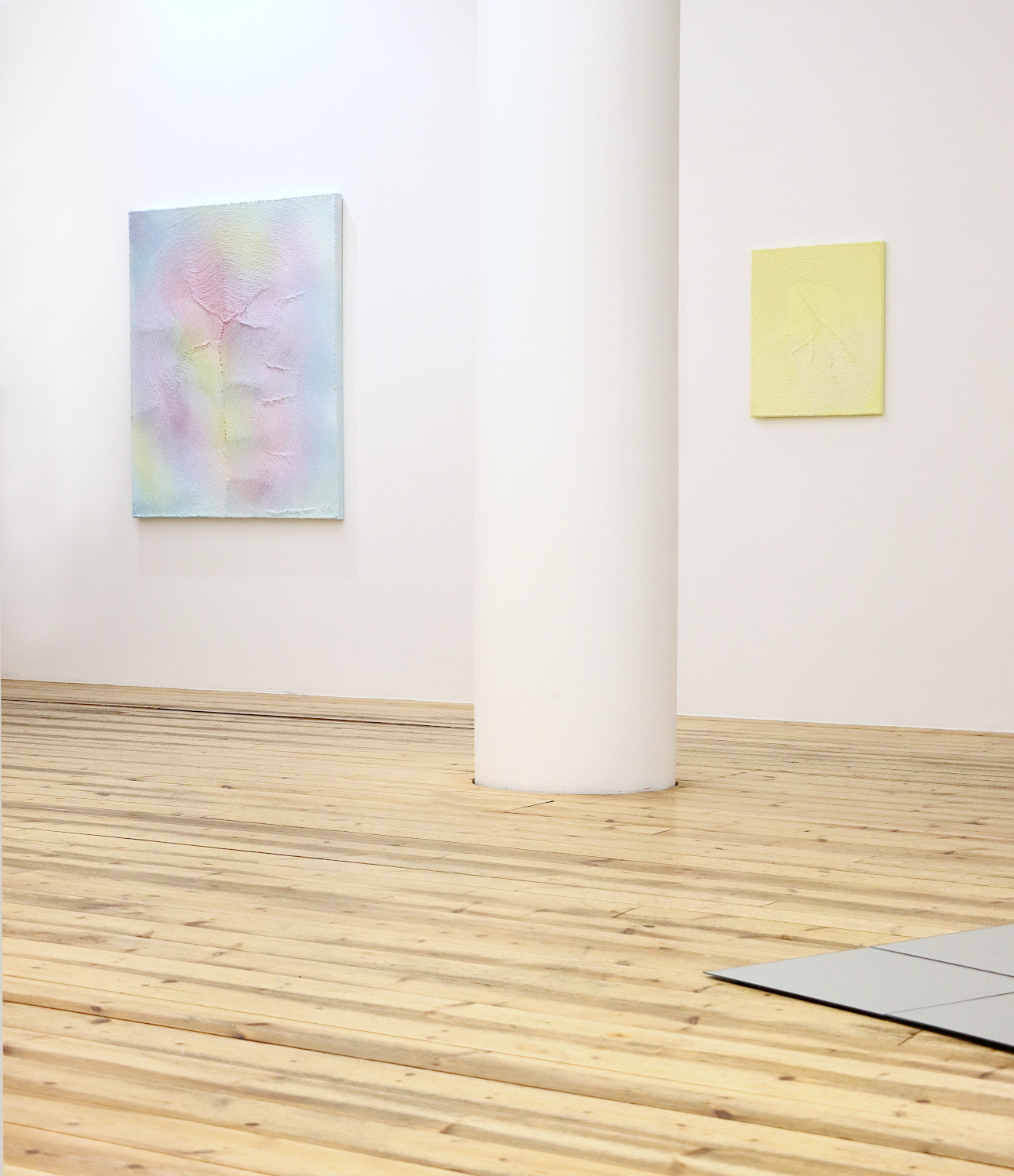
Installation view of Field of Immanence, 2026; As if eternity lay before them, 2025; The hour when a new clarity is delivered, 2025.
 Installation view of Picnic 1, Galleria Heino (Helsinki, Finland, 2026). Work by Lana Haga: Thousand possibilities in a thousand possible realities, 2023. In the background: Laura Lilja, Cargo Green, 2025 and Industrial White, 2026.
Galleria Heino’s spring season kicks off with PICNIC vol. 1, a group exhibition featuring seven artists. The works explore matters such as the interface between the representational and the non-representational, conceptually examining our everyday perceptions and addressing ecological issues. The works feature nature, landscape as well as urban environments. The techniques applied include process-based drawing that emphasises temporality, the use of camera, handicraft techniques and the manipulation of streams of digital images.
Lana Haga (b. 1986) uses industrial surplus materials, plastics and textiles in her sculptures, addressing issues of environmentally harmful overproduction and the threat of ecosystem collapse.
The free-standing sculptures in the Rebirth series are made from extruded industrial waste plastic. Their form comes from the interaction between machine, artist and chance. In her sculptures, Haga presents plastic – a material that originates from organic matter that is billions of years old – as a mark of long-term geological development as well as an impression of human time. The sculptures are like fossil records of a substance that nature produced but that has been consumed and abandoned by humankind. Beyond their underlying critical stance, Haga’s sculptures appear as creatures that present possible life forms and waver between the representational and the non-representational, evidence of forms that life can take as it adapts to changes.
In the Superposition series, Haga has worked cotton twine into meditative patterns on canvas by hand. The patterns emerge from the inherent nature and behaviour of the twine as well as the artist’s intuitive touch. Haga has also applied subtle, gradient colours of thinned oil paint or acrylic ink to enliven the twine-patterned surface. On closer inspection, the surfaces that at first appear monochromatic turn into structures that reflect nature and the universe. The titles of the works in the Superposition series are from Rainer Maria Rilke’s Letters to a Young Poet (1903-1908), which Haga says captures the existential states that underlie the artistic creative process. An audio work based on Rilke’s poems will also be played in the exhibition space.
Both the Superposition and the Rebirth series draw inspiration from quantum field theory, according to which a field contains all possible directions within itself before a single individual reality takes an established form. In Haga’s work Thousand Possibilities in a Thousand Possible Realities, 2023, a textile sculpture evoking anthropomorphic shapes is placed on top of a mirror on the floor. The work examines the continual transformation of everything, shaped by the viewers’ experience as they move around it.
Text by Rauli Haino
Lana Haga (b. 1986) uses industrial surplus materials, plastics and textiles in her sculptures, addressing issues of environmentally harmful overproduction and the threat of ecosystem collapse.
The free-standing sculptures in the Rebirth series are made from extruded industrial waste plastic. Their form comes from the interaction between machine, artist and chance. In her sculptures, Haga presents plastic – a material that originates from organic matter that is billions of years old – as a mark of long-term geological development as well as an impression of human time. The sculptures are like fossil records of a substance that nature produced but that has been consumed and abandoned by humankind. Beyond their underlying critical stance, Haga’s sculptures appear as creatures that present possible life forms and waver between the representational and the non-representational, evidence of forms that life can take as it adapts to changes.
In the Superposition series, Haga has worked cotton twine into meditative patterns on canvas by hand. The patterns emerge from the inherent nature and behaviour of the twine as well as the artist’s intuitive touch. Haga has also applied subtle, gradient colours of thinned oil paint or acrylic ink to enliven the twine-patterned surface. On closer inspection, the surfaces that at first appear monochromatic turn into structures that reflect nature and the universe. The titles of the works in the Superposition series are from Rainer Maria Rilke’s Letters to a Young Poet (1903-1908), which Haga says captures the existential states that underlie the artistic creative process. An audio work based on Rilke’s poems will also be played in the exhibition space.
Both the Superposition and the Rebirth series draw inspiration from quantum field theory, according to which a field contains all possible directions within itself before a single individual reality takes an established form. In Haga’s work Thousand Possibilities in a Thousand Possible Realities, 2023, a textile sculpture evoking anthropomorphic shapes is placed on top of a mirror on the floor. The work examines the continual transformation of everything, shaped by the viewers’ experience as they move around it.
Text by Rauli Haino
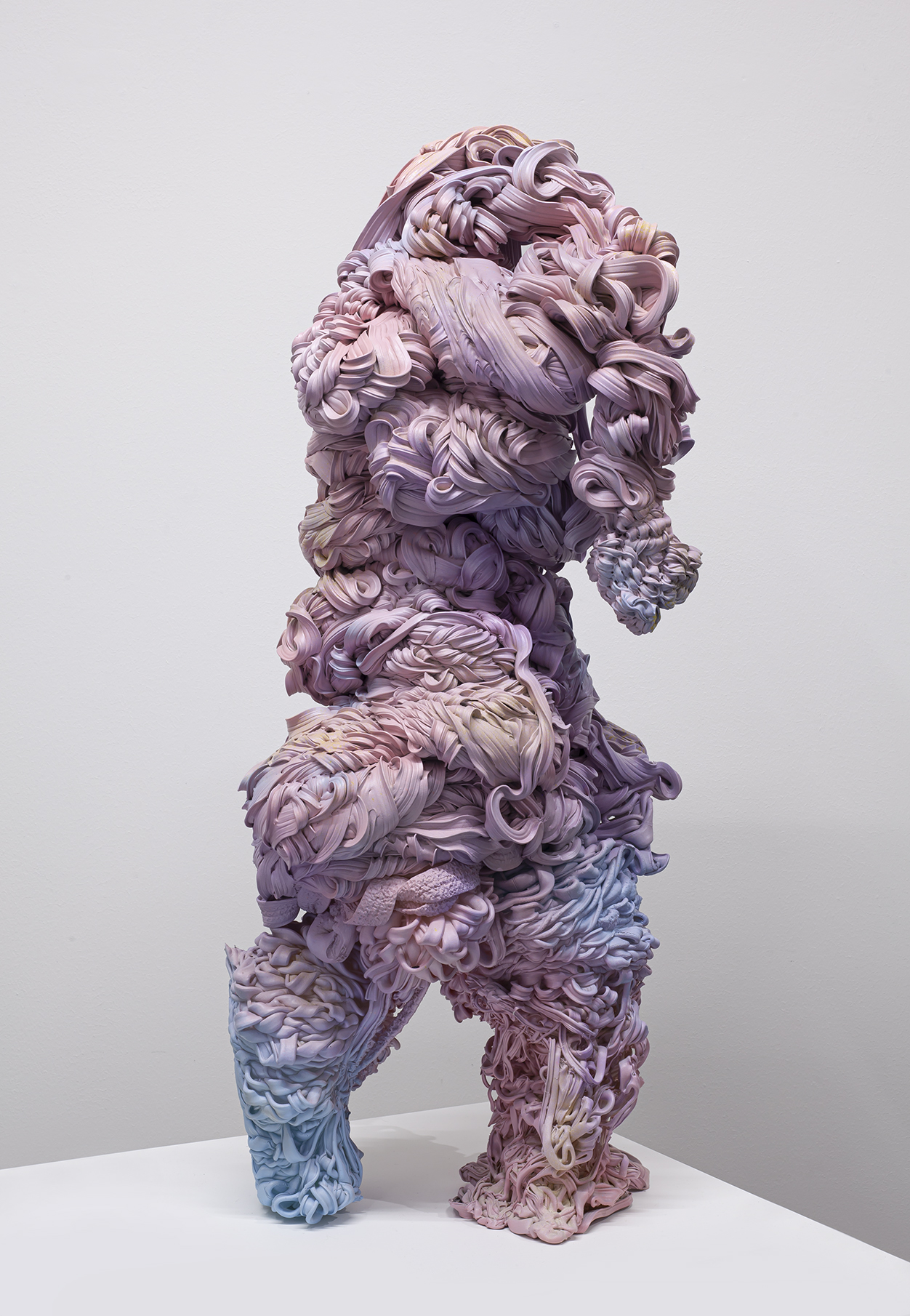
Installation view of Synthetic growth, 2026
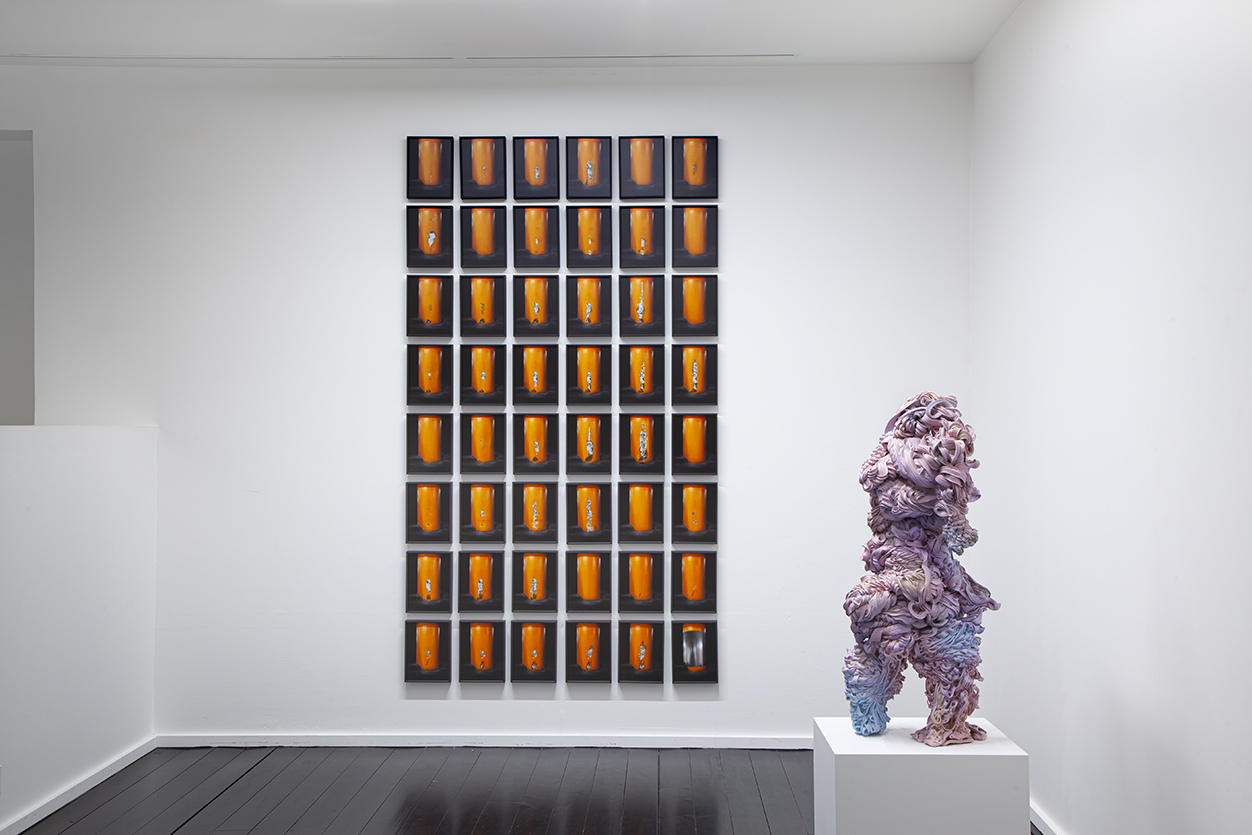
Installation view of Picnic 1, Galleria Heino (Helsinki, Finland, 2026). Works: Serraglia, (Almost) Missed: Learning from a Parking Lot, 2025; Lana Haga, Synthetic growth, 2026
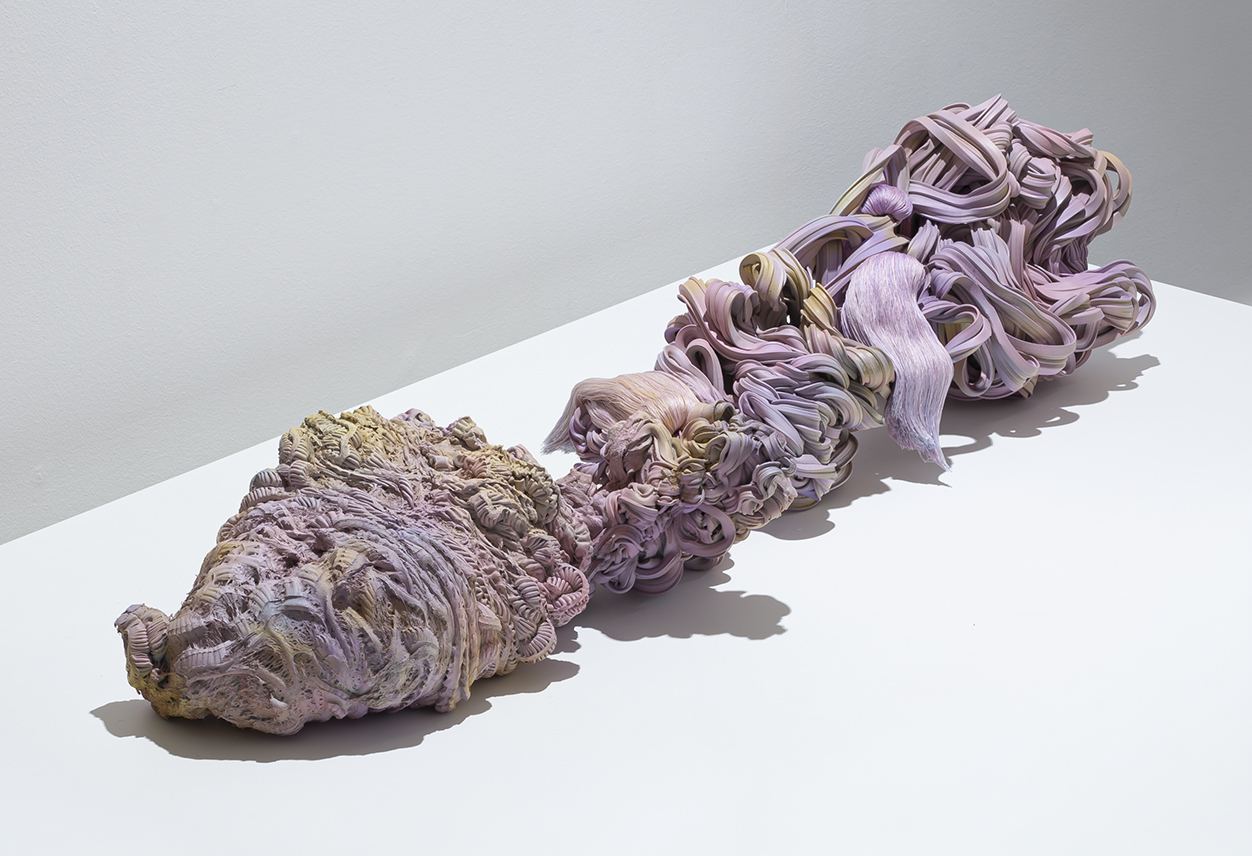
Installation view of Adaptive beauty, 2026


Installation view of Picnic 1, Galleria Heino (Helsinki, Finland, 2026). Sculpture series titled Rebirth by Lana Haga.
Photography: Pertti Kärki.